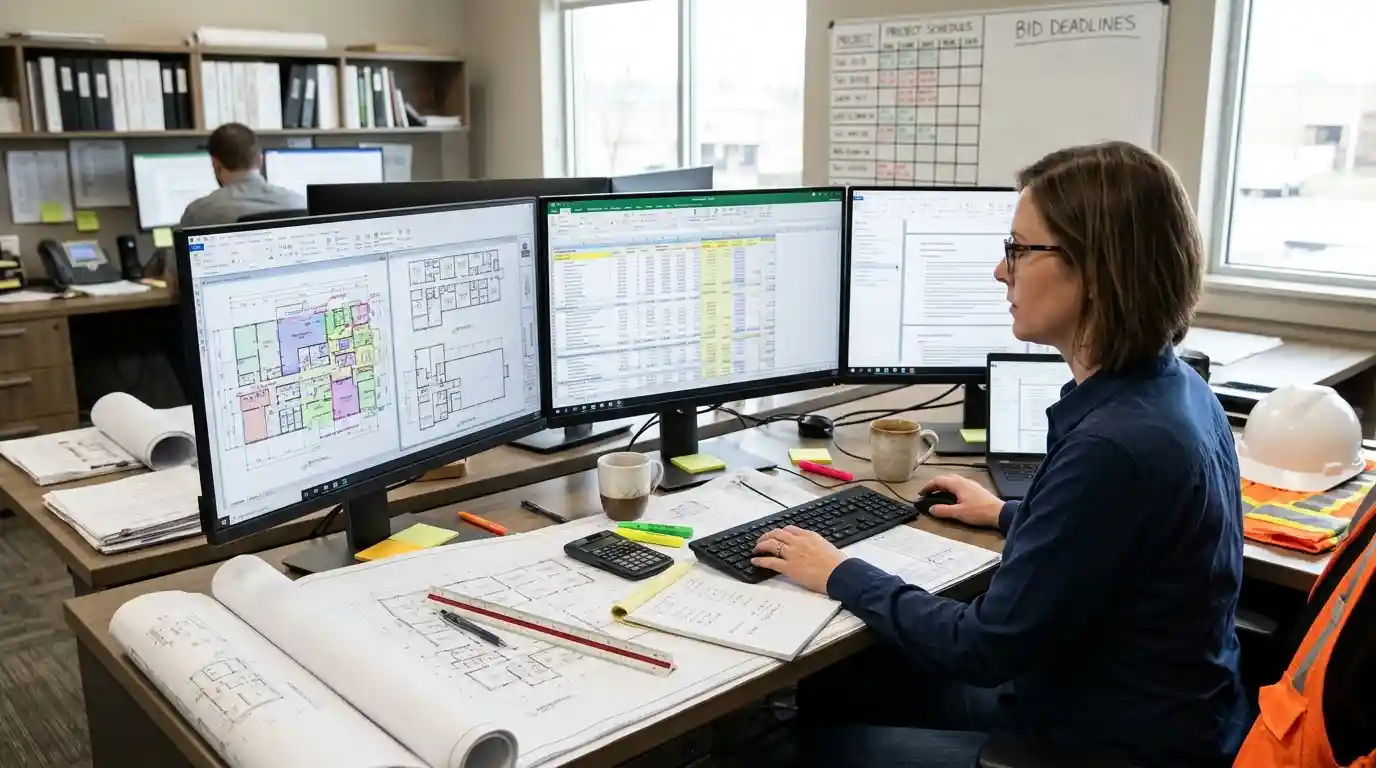
Commercial construction projects involve multiple trades, extensive material requirements, and detailed coordination between contractors, subcontractors, and suppliers. Before work begins, construction professionals must understand the project’s financial scope, calculate material quantities, and determine the labor and equipment needed to complete each phase.
Accurate estimating plays an important role in this process. Whether a contractor is preparing a proposal for a commercial building, evaluating site preparation expenses, or calculating framing materials, reliable quantity information helps reduce budgeting uncertainties.
Commercial estimating services, sitework estimating services, and lumber takeoff services provide specialized support for these different construction requirements. Understanding their importance can help contractors improve bidding accuracy and manage project resources more effectively.
The Importance of Commercial Estimating Services
Commercial construction involves more complicated requirements than many smaller residential projects. Office buildings, shopping centers, educational facilities, healthcare properties, and industrial developments require multiple construction trades working together.
Each trade contributes to the overall project budget, making detailed cost calculations essential.
Commercial estimating services help contractors evaluate the complete financial requirements of a project by reviewing architectural drawings, structural plans, engineering documents, and technical specifications.
A commercial estimate may include several construction divisions, such as:
- General requirements and temporary facilities.
- Concrete foundations and structural systems.
- Masonry and structural steel.
- Lumber, framing, and interior partitions.
- Roofing and waterproofing.
- Doors, windows, and glazing.
- Drywall, painting, and flooring.
- Mechanical, electrical, and plumbing systems.
- Site preparation and exterior improvements.
Estimators organize these requirements into detailed quantity and cost reports. Depending on the contractor’s needs, the estimate may include material prices, labor expenses, equipment costs, subcontractor allowances, and other relevant project expenses.
For example, a contractor preparing a bid for a commercial office development needs to account for structural construction, interior finishes, building systems, and exterior improvements. Reviewing all these requirements helps create a more realistic project budget.
Why Detailed Commercial Cost Estimates Matter
Commercial contractors frequently work with tight bidding schedules and complex construction documents. Even a small estimating error can affect the overall financial performance of a project.
Detailed estimating provides several practical advantages.
Improved Budget Planning: Contractors can understand the expected costs of different construction activities before committing to a project.
More Competitive Bids: Accurate quantity calculations help businesses prepare proposals that reflect the actual scope of work.
Better Subcontractor Evaluation: General contractors can compare subcontractor quotations against their own estimates.
Reduced Cost Uncertainty: Identifying materials and labor requirements early helps minimize unexpected expenses.
Improved Project Organization: Detailed estimates provide useful information for procurement and construction scheduling.
A reliable estimate is not simply about finding the lowest possible price. It is about identifying the actual work involved and calculating its financial requirements accurately.
Understanding Sitework Estimating Services
Site preparation is one of the earliest stages of most construction projects. Before foundations, structural systems, or utilities can be installed, contractors must prepare the land according to engineering plans and project specifications.
This work may involve clearing, excavation, grading, soil removal, drainage installation, and other activities.
Sitework estimating services help contractors calculate the quantities and costs associated with these operations.
Estimators review civil engineering drawings, grading plans, utility layouts, and site development documents to identify the work required.
Common sitework estimating categories include:
- Land clearing and demolition.
- Excavation and earthwork.
- Cut and fill calculations.
- Soil removal and disposal.
- Grading and leveling.
- Aggregate base installation.
- Asphalt and concrete paving.
- Stormwater drainage systems.
- Underground utility installations.
- Erosion control and landscaping preparation.
Each activity requires different materials, equipment, and labor resources. For example, excavation expenses depend on soil conditions, digging depths, equipment requirements, and the distance involved in transporting excavated material.
A detailed sitework estimate helps contractors understand these factors before submitting a bid.
Key Factors That Influence Sitework Costs
Sitework costs can vary significantly depending on the location, existing land conditions, project design, and construction requirements.
Several factors deserve particular attention during estimating.
Earthwork Quantities
Cut and fill calculations determine how much soil must be removed, relocated, or added to achieve the required elevations.
Estimators compare existing and proposed site elevations to calculate earthwork quantities.
Soil Conditions
Rock excavation, unstable soils, groundwater, and contaminated materials may require additional equipment or specialized procedures.
These conditions can affect labor productivity and project expenses.
Drainage and Underground Utilities
Stormwater systems, sanitary sewer lines, water supply networks, and underground electrical infrastructure require careful quantity calculations.
Estimators review utility plans to identify pipe sizes, lengths, fittings, structures, and associated installation requirements.
Paving and Exterior Improvements
Parking areas, access roads, sidewalks, curbs, and exterior concrete installations are also important parts of site development.
Accurate measurements help contractors calculate the required aggregate, asphalt, concrete, and other materials.
Lumber Takeoff Services for Residential and Commercial Framing
Lumber is a major material requirement in many residential and commercial construction projects. Framing systems provide structural support for walls, floors, roofs, and other building components.
Accurately calculating lumber quantities is essential because incorrect measurements can result in material shortages, unnecessary purchases, and installation delays.
Lumber takeoff services help contractors determine the types and quantities of wood products required for a construction project.
Estimators review architectural and structural drawings to identify framing components and prepare detailed material lists.
Typical lumber takeoff items include:
- Wall studs and plates.
- Floor joists and rim boards.
- Roof rafters and trusses.
- Headers and beams.
- Structural posts and columns.
- Plywood and OSB sheathing.
- Blocking and bracing.
- Engineered wood products.
- Fascia and other framing accessories.
The final report may organize materials according to dimensions, lengths, grades, and other project specifications.
For example, a residential contractor building multiple houses needs to calculate lumber requirements for exterior walls, interior partitions, floor systems, and roof structures. A detailed takeoff helps determine purchasing quantities and coordinate material deliveries.
How Accurate Lumber Quantities Reduce Material Waste
Lumber purchasing requires careful planning because wood products are available in different dimensions, lengths, grades, and specifications.
Ordering the wrong quantities can create unnecessary costs, particularly when a project involves extensive framing work.
Professional lumber takeoffs help contractors:
- Identify framing materials from structural and architectural plans.
- Calculate the required quantities for different building components.
- Organize materials according to dimensions and specifications.
- Prepare material lists for supplier quotations.
- Review changes when construction drawings are revised.
- Plan material deliveries according to project requirements.
Accurate takeoffs also help contractors compare supplier prices and evaluate purchasing options.
However, material requirements should account for project-specific cutting, waste, and installation allowances rather than assuming every measured quantity translates directly into an exact purchasing quantity.
How Digital Estimating Software Improves Accuracy
Modern estimating companies use specialized software to review construction drawings and prepare detailed quantity reports.
Digital tools reduce repetitive measurement work and make it easier to manage large drawing packages.
Some widely used platforms include Bluebeam Revu, PlanSwift, and Trimble estimating solutions.
For commercial estimating, these tools support measurements across different construction divisions. Sitework estimators can calculate areas, lengths, and volumes, while lumber estimators can organize framing quantities and material dimensions.
Digital estimating workflows also make drawing revisions easier to manage.
When an architect changes a building layout or an engineer updates a site grading plan, estimators can review the revised documents and update the affected quantities.
Although software improves efficiency, accurate results still depend on understanding construction drawings, specifications, measurement methods, and installation requirements.
Why Contractors Consider Outsourcing Estimating Work
Construction companies do not always have sufficient internal resources to handle every estimating assignment. During busy bidding periods, managing several commercial projects simultaneously can place additional pressure on estimating departments.
Outsourcing provides a flexible way to obtain additional professional support.
Contractors can outsource complete commercial estimates or request assistance with specific trades, including sitework, concrete, lumber, drywall, roofing, and MEP systems.
Some important advantages include:
Additional Estimating Capacity: External professionals can help manage large drawing packages and overlapping bid deadlines.
Flexible Business Operations: Contractors can request support according to project requirements rather than maintaining a larger permanent department.
Trade-Specific Knowledge: Estimating providers may offer experience across specialized construction divisions.
Time Management: Internal employees can focus on project coordination, client communication, and business development.
Organized Reports: Detailed quantity breakdowns help contractors review project costs and purchasing requirements.
Before selecting an outsourcing partner, businesses should evaluate sample estimates, software capabilities, industry experience, communication, and turnaround expectations.
Choosing the Right Estimating Partner
Different projects require different estimating approaches. A commercial general contractor may need a complete cost estimate, while a site development subcontractor may require detailed earthwork calculations.
Similarly, a framing contractor may need a lumber takeoff organized by material dimensions and structural components.
A suitable estimating partner should understand the contractor’s trade, project specifications, and preferred reporting format.
It is also important to establish clear expectations regarding drawing revisions, material pricing, labor assumptions, and project scope.
Providing complete construction documents and communicating project requirements early can help improve the quality and usefulness of the final estimate.
Conclusion
Successful construction projects depend on accurate planning, reliable quantity calculations, and realistic cost expectations.
Commercial estimating services help contractors evaluate the financial requirements of complex building projects. Sitework estimating services provide detailed calculations for excavation, grading, utilities, drainage, and exterior improvements. Lumber takeoff services help framing professionals identify the wood products and quantities required for structural construction.
By combining experienced estimating professionals with modern digital tools, contractors can improve bidding preparation, manage material purchasing, and reduce unnecessary estimating uncertainties.
Whether working on commercial developments, residential communities, or large site preparation projects, detailed estimating support provides a stronger foundation for informed construction decisions.

I Am Henry Collins writes creative caption ideas at captionscrafter.com, helping social media users find catchy, trendy, and engaging captions.