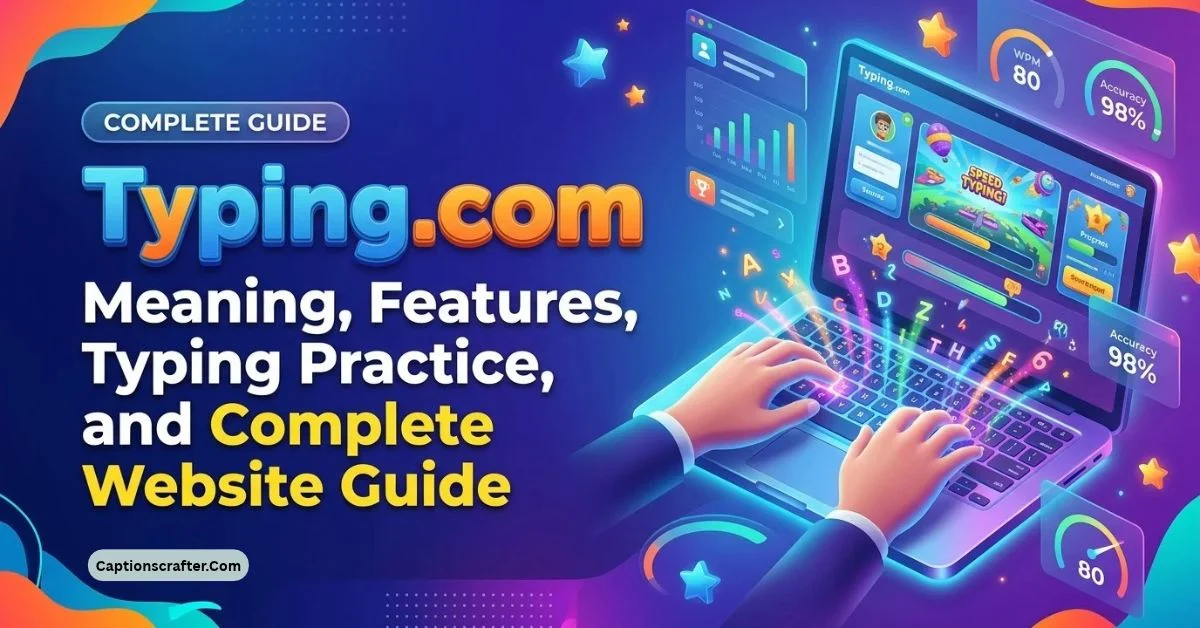
Learning to type quickly and accurately is an important skill in today’s digital world. Whether students are completing school assignments, professionals are writing reports, or beginners are learning to use a keyboard, typing skills can save time and improve productivity. Typing.com is an online learning platform associated with typing lessons, keyboarding practice, typing tests, and digital literacy education.
People search for Typing.com to understand what the website offers, how its lessons work, whether it is suitable for beginners, and how it can help improve typing speed. Teachers and students may also look for classroom tools, progress tracking, keyboarding exercises, and educational resources.
Unlike a typical abbreviation used in text messages, Typing.com is primarily a website name. However, the word “typing” can also refer to entering text on a keyboard or, in certain professional and scientific contexts, classifying information into categories.
This guide explains the meaning of Typing.com, its background, common uses, related terminology, alternatives, and practical tips for getting started.
1. Meaning and Definition of Typing.com
Typing.com is an online platform designed to help users develop keyboarding skills through typing lessons, practice activities, assessments, and related educational resources. It is particularly relevant to students, teachers, and people who want to become more comfortable using a computer keyboard.
The name has two simple parts. “Typing” refers to entering letters, numbers, symbols, and other characters using a keyboard. “.com” is a domain extension commonly associated with commercial websites. Together, the name identifies a website focused on typing education.
What is Typing.com used for?
Typing.com is generally associated with learning and practicing touch typing, which means entering text without constantly looking down at the keyboard. The approach encourages users to build familiarity with key positions and develop consistent finger movements.
Common learning goals include:
- Typing accuracy: Entering the correct characters while reducing mistakes.
- Typing speed: Increasing the number of words typed per minute.
- Keyboard familiarity: Learning where letters, numbers, and punctuation marks are located.
- Proper technique: Developing consistent finger placement and typing habits.
- Digital literacy: Becoming more confident when working with computers and text-based tasks.
The specific lessons and features available may change over time, so users should consult the official website for current offerings.
Who can use it?
Beginners can use typing lessons to understand basic keyboard positions, while more experienced typists can practice improving their speed and accuracy. Students may benefit when preparing assignments, writing essays, or completing computer-based examinations. Teachers may use typing resources as part of classroom instruction.
Adults can also practice typing for professional development, particularly if their work involves emails, documents, data entry, or customer support.
Is Typing.com a typing term or a website?
Typing.com is a website name, whereas “typing” is a general activity. Someone saying “I am practicing typing” is describing an action. Someone saying “I use Typing.com” is identifying a particular online resource.
Understanding this distinction helps users interpret the keyword correctly when they encounter it in search results, educational discussions, or online recommendations.
2. Background and Development of Typing.com
Typing education has changed significantly as computers have become part of everyday life. In the past, people often learned keyboarding on typewriters or through classroom exercises using printed materials. Today, web-based platforms can provide interactive practice that users access through a computer and an internet connection.
Typing.com belongs to this broader category of online keyboarding education. Its central purpose is to help users develop a practical skill through structured lessons and repeated exercises.
From traditional typing lessons to online practice
Traditional typing instruction often involved learning the home-row keys, repeating drills, and measuring performance with timed exercises. Students would practice letter combinations until their fingers became more familiar with the keyboard.
Online learning can build on these principles by presenting lessons on screen and allowing users to practice at their own pace. Digital exercises may offer immediate feedback, helping learners recognize errors and identify areas that need more attention.
A web-based format also makes practice more flexible. Depending on the platform’s current features, learners may be able to access lessons at home, in a school computer lab, or in another suitable setting.
Why keyboarding remains important
Voice input, touchscreen keyboards, and other technologies are increasingly common, but physical keyboarding remains useful for many tasks. Writing longer documents, entering information into spreadsheets, coding, and managing professional correspondence often require accurate keyboard use.
Typing skills are especially helpful when people need to concentrate on their ideas rather than searching for individual keys. However, faster typing is not the only goal. Accuracy, comfort, and good technique are equally important.
The role of teachers and students
Typing education can be part of digital literacy instruction. Teachers may introduce keyboarding to students who are beginning to use computers, while older learners may practice to improve their performance on school assignments.
Students can benefit from short, regular practice sessions instead of trying to achieve a large speed increase in a single day. Consistency gives them more opportunities to develop muscle memory and correct recurring errors.
As with any online learning resource, the exact experience depends on the platform’s current design, account options, and available lessons. For up-to-date information about features, classroom access, or pricing, users should check Typing.com’s official website.
3. Usage in Different Contexts: Education, Work, and Everyday Life
The word “typing” appears in many settings, but the meaning changes slightly depending on the activity. Typing.com specifically relates to a website, while typing itself is a skill used in education, business, communication, and computing.
In education
Students type essays, homework assignments, research notes, and classroom responses. Learning keyboarding can make these activities more efficient, especially when assignments require long written answers.
Teachers may introduce typing practice to help learners become comfortable with the keyboard before they begin completing more demanding digital tasks. Regular exercises can also encourage students to pay attention to punctuation, spelling, and accuracy.
For example, a student who struggles to find individual keys may spend more time looking at the keyboard than organizing ideas. Keyboarding practice can gradually reduce this difficulty.
In professional environments
Typing is essential in many jobs. Office employees write emails and reports, customer service representatives respond to messages, and administrative staff enter information into digital systems.
Programmers use keyboards to write code, while researchers and writers use them to prepare documents. In these settings, good typing habits can improve efficiency, although the importance of speed varies by role.
Accuracy is particularly important when entering names, addresses, numbers, or other details where a small error can cause confusion.
In social media and personal communication
People type messages, captions, comments, and posts on social platforms. Although mobile devices often rely on touchscreen keyboards, many users create longer posts or manage accounts using a computer.
Typing practice may help users enter text more comfortably, but it does not automatically improve writing quality. Clear communication also depends on vocabulary, grammar, organization, and an understanding of the audience.
In digital skills training
Typing can be part of a broader effort to improve computer confidence. Someone learning to use spreadsheets, online forms, document editors, or workplace software may find keyboarding practice useful.
Typing.com is one possible resource in this learning process. Users should choose exercises that match their current ability and focus on gradual improvement rather than comparing themselves with experienced typists.
4. Meaning of Typing.com in Chat, WhatsApp, Instagram, and TikTok
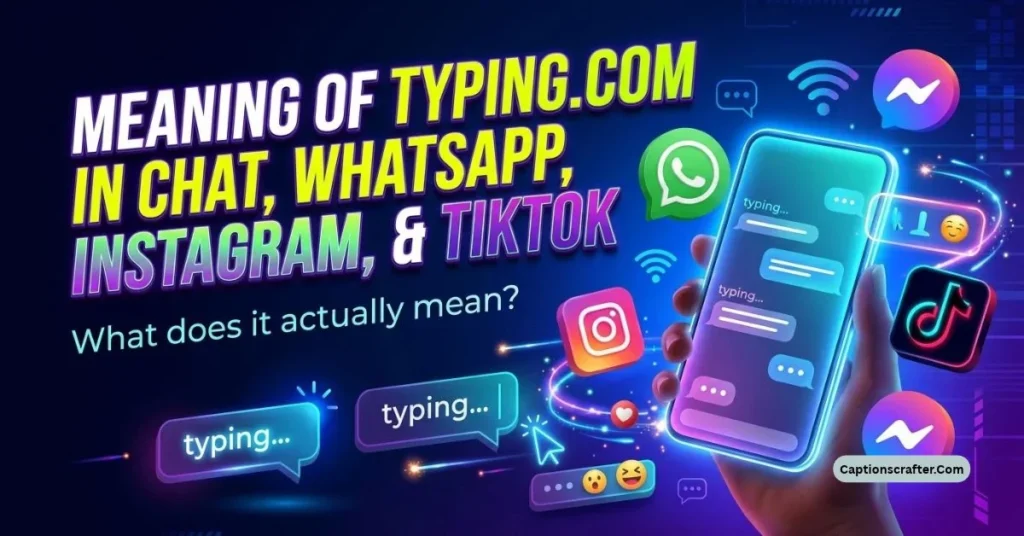
When someone writes “Typing.com” in a message, it usually refers to the website. The name is not a widely recognized texting abbreviation with a separate meaning like “LOL,” “BRB,” or “IDK.”
The surrounding message helps explain why the person mentioned it. They might be recommending a learning resource, discussing homework, sharing a typing test, or talking about improving computer skills.
Typing.com in chat messages
A friend might write, “Try Typing.com if you want to improve your keyboard speed.” This is a recommendation for a learning platform.
Other examples include:
- “Our teacher suggested Typing.com for practice.”
- “I used a typing website to prepare for my computer class.”
- “I’m trying to improve my words-per-minute score.”
- “Do you know any good websites for typing lessons?”
In these sentences, the term is being used literally rather than as slang.
Typing.com on WhatsApp
People may share a website link in a class group, send a typing exercise to a friend, or ask someone for help finding online lessons. Parents may also discuss typing resources with other parents or teachers.
Before opening a link, make sure the web address is correct. A message containing the words “Typing.com” does not necessarily prove that the link leads to the legitimate website.
Typing.com on Instagram
The name might appear in educational posts, study tips, digital-skills recommendations, or content about improving productivity. Users may discuss keyboard practice as part of a broader conversation about learning computer skills.
Typing.com on TikTok
Creators may post typing challenges, demonstrate their words-per-minute results, or recommend resources for students. Viewers might search for Typing.com after watching a video about keyboarding.
A creator’s demonstration can be helpful, but results vary depending on the learner’s experience, keyboard layout, practice routine, and the type of text being used.
In short: Typing.com refers to a website in these contexts. It does not have a standard hidden meaning in WhatsApp, Instagram, or TikTok messages.
5. Does Typing.com Have a Meaning in Physics, Medical, or Aircraft Terminology?
The word “typing” can be used in specialized fields, but Typing.com is primarily the name of an online typing education platform. It is not a generally recognized scientific, medical, or aviation term.
Because abbreviations can have different meanings in different industries, readers should avoid assuming that a similar-looking word refers to the same concept.
Meaning in physics
Physics uses terms and mathematical symbols to describe matter, energy, motion, forces, and other natural phenomena. “Typing” is not generally used as a core physics concept, and Typing.com is not a standard physics term.
The word may appear in discussions of computer-based scientific work, such as typing equations into software or entering experimental data. In those cases, it refers to the act of entering information rather than a distinct physical principle.
Meaning in medical terminology
In healthcare, “typing” can refer to classification procedures. One familiar example is blood typing, which identifies a person’s blood group based on specific biological markers.
This is different from keyboard typing. Blood typing is a medical process, whereas typing.com is a website name. The shared word does not mean the two subjects are related.
Other medical uses of the word may involve categorizing information or identifying a particular type of condition, organism, or tissue. The precise meaning depends on the clinical context.
Meaning in aircraft and aviation terminology
Aviation uses specific terms for aircraft models, flight operations, maintenance procedures, and technical documentation. “Typing” may occasionally describe entering information into an aircraft-related database or document, but Typing.com is not a standard aircraft component or flight procedure.
The word “type” also appears in aircraft classification and certification contexts, where it can refer to a particular aircraft design or category. That usage should not be confused with keyboarding.
How to interpret unfamiliar terms
If a similar word appears in a scientific report, medical record, or aviation document, examine the complete sentence and consult a trusted specialist reference. Do not assume that the website name supplies a technical definition.
For the keyword Typing.com, the most direct and relevant interpretation is the online platform for typing practice and education.
6. Common Misconceptions About Typing.com
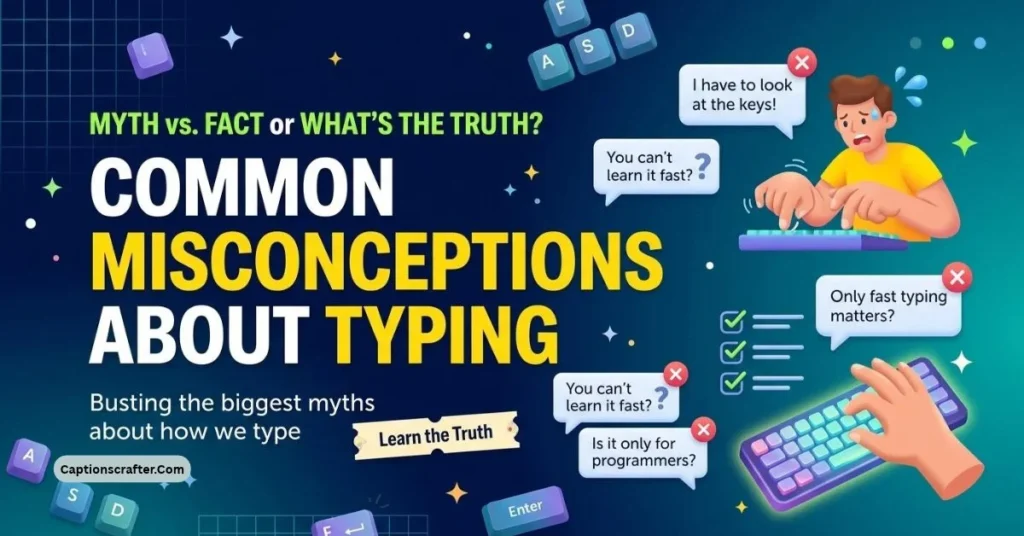
People may make assumptions about Typing.com because its name resembles a general activity. Understanding what the platform represents helps avoid confusion.
Misconception 1: Typing.com is an abbreviation
Typing.com is primarily a website name, not a standard abbreviation with a universally accepted full form. Its wording directly describes its association with typing education.
Misconception 2: Typing speed is the only goal
Speed is one way to measure progress, but it should not be the only priority. Accuracy, comfort, proper technique, and consistency are important too.
A learner who types quickly but makes frequent mistakes may need to slow down and focus on accuracy before trying to increase speed.
Misconception 3: Beginners must type quickly immediately
New typists naturally need time to learn key positions and develop coordination. Progress varies from person to person, so comparisons with experienced users may be discouraging.
Short, regular practice sessions are generally more useful than trying to master the keyboard in one sitting.
Misconception 4: Typing.com is a messaging app
The name may appear in conversations, but the platform is associated with typing lessons and related learning resources rather than functioning as a conventional chat service.
Misconception 5: A high test score guarantees professional typing ability
A strong score on a short exercise does not necessarily reflect performance on every kind of task. Longer documents, unfamiliar words, numbers, punctuation, and real-world working conditions can affect results.
Misconception 6: All typing websites offer identical features
Online typing tools differ in their lesson structure, tests, reporting features, supported languages, accessibility options, and account requirements. Users should check the current details of each platform before choosing one.
Misconception 7: Faster typing automatically means better writing
Typing speed measures how quickly someone enters text, not how effectively they communicate. Good writing still requires clear ideas, suitable wording, organization, and editing.
The most effective approach is to treat typing as a skill that improves through practice. Focus on reliable technique first, then work toward a comfortable and sustainable speed.
7. Similar Terms and Alternatives to Typing.com
Typing.com is part of a broader group of resources for keyboarding education. Different tools may be suitable depending on whether someone wants structured lessons, speed tests, games, or professional typing assessments.
TypingClub
TypingClub is an online typing education platform known for structured keyboarding lessons. It may be useful for learners who prefer a guided learning path.
Keybr
Keybr provides typing practice designed to help users become more familiar with keyboard patterns and improve their typing performance. It can appeal to learners who want focused practice.
10FastFingers
10FastFingers is associated with typing-speed tests and challenges. It can be useful for checking performance, although a short test should not be treated as a complete measure of typing ability.
Monkeytype
Monkeytype offers customizable typing tests and performance tracking. It is often used by people who want to practice speed, accuracy, and different test settings.
Ratatype
Ratatype provides typing lessons and typing tests. It may suit users who want a combination of instruction and performance assessment.
Comparing typing resources
| Resource | General focus |
|---|---|
| Typing.com | Typing lessons and educational practice |
| TypingClub | Structured keyboarding lessons |
| Keybr | Focused typing practice |
| 10FastFingers | Typing-speed tests and challenges |
| Monkeytype | Customizable typing tests |
| Ratatype | Typing lessons and assessments |
Features, availability, and pricing can change. Check each service’s official website to confirm current options before signing up.
How to choose an alternative
Beginners may prefer guided lessons that introduce keys gradually. Experienced typists may want timed tests or customizable exercises. Teachers may prioritize classroom management and student progress tools.
Choose a platform that matches your goal rather than selecting one based only on popularity. It can also be helpful to try a few short exercises before committing to a particular practice routine.
8. How to Respond When Someone Mentions Typing.com
If someone mentions Typing.com in a message, your response depends on what they are discussing. Since the name is not normally slang, there is usually no need to decode it as an abbreviation.
If someone recommends it
You could reply:
- “Thanks! I’ll check it out.”
- “Is it suitable for beginners?”
- “Does it offer lessons as well as typing tests?”
- “I’m trying to improve my typing accuracy, so I’ll give it a try.”
If a teacher shares it
A student might respond, “Thanks, I’ll use it to practice before the next computer lesson.” If the instructions are unclear, ask which lesson or activity you should complete.
If a friend shares a typing score
You could ask, “How many words per minute did you get?” or “Was that score from a timed test?”
Remember that scores depend on the exercise and its conditions, so they are most useful when compared under similar circumstances.
If someone asks for a typing website
You can explain what you need: beginner lessons, advanced speed practice, classroom exercises, or a quick test. This makes it easier to recommend a resource that fits the person’s goal.
If a link seems suspicious
Do not assume a link is safe just because the message mentions a familiar website. Check the address before opening it, and avoid providing passwords or personal information on pages you cannot verify.
If you do not understand the message
Ask a straightforward question, such as, “Do you mean the website for learning keyboard typing?” This resolves confusion without making an incorrect assumption.
In most situations, a brief and practical response is sufficient. The surrounding conversation will usually make it clear whether the person is talking about typing practice, a school assignment, or a website recommendation.
9. Differences Between Typing.com and Similar Words
Understanding the difference between a website name and related terms can help readers interpret search results accurately.
Typing.com vs. typing
“Typing” is the activity of entering text through a keyboard or another input method. Typing.com is a specific website associated with learning and practicing that skill.
For example, “I am typing an email” describes an action, while “I am using Typing.com” identifies a resource.
Typing.com vs. a typing test
A typing test measures performance under particular conditions, often by calculating words per minute and accuracy. A typing education platform may offer tests, lessons, or both, but the terms do not mean the same thing.
A test measures performance at a particular time; lessons are intended to help learners improve.
Typing.com vs. keyboarding
Typing and keyboarding are closely related terms. “Keyboarding” often emphasizes using a keyboard effectively, including key placement, technique, and accuracy. Typing commonly refers to entering text.
In educational contexts, the words may overlap.
Typing.com vs. text messaging
Text messaging involves sending written messages through communication services. Typing is one way to create those messages, while Typing.com is a separate online learning resource.
A person can type messages without ever using a typing lesson website.
Typing.com vs. internet slang
Internet slang includes informal expressions such as “LOL” and “BRB.” Typing.com is a website name, not a standard slang term.
Although someone may write it in a chat, its meaning remains a reference to the platform unless the conversation clearly indicates otherwise.
These distinctions are useful for understanding what a search result or message actually refers to. They also prevent the mistaken assumption that every word associated with digital communication is an abbreviation or slang expression.
10. Relevance of Typing.com in Online Conversations and Dating Apps
Typing.com does not have a standard romantic or dating-related meaning. However, it can appear in conversations on social platforms or dating apps when people discuss education, work, computer skills, or personal goals.
Talking about learning and productivity
Someone might mention typing practice while discussing a course, a new job, or a personal development goal.
For example: “I’m learning to type more accurately because my new role involves writing reports.”
In this context, the website is simply a possible learning resource.
Discussing school or work
Students may exchange recommendations for typing lessons before an assignment or computer test. Professionals might discuss keyboarding practice when preparing for a role involving data entry or written communication.
These conversations are about practical skills rather than hidden meanings.
Understanding the context in dating apps
If someone mentions Typing.com in a dating-app conversation, they may be talking about studies, work, or learning something new. The website name alone does not imply flirting, romantic interest, or a coded message.
If you are unsure why it came up, ask a natural follow-up question, such as, “Are you learning to type faster for work or school?”
Staying safe online
When people meet through social platforms, it is sensible to be careful with unexpected links. Avoid entering login details through unfamiliar pages and do not share sensitive information with someone simply because they recommend a website.
A genuine discussion about learning resources should not require you to disclose passwords, verification codes, or financial information.
Ultimately, Typing.com can be mentioned in a wide variety of digital conversations. Its basic meaning remains connected to typing education, and the surrounding context explains why it is relevant.
Conclusion
Typing.com is an online resource associated with keyboarding lessons, typing practice, and the development of digital skills. It may be useful for beginners learning key positions, students preparing for computer-based assignments, teachers introducing keyboarding, and adults who want to become more efficient when working with text.
Improving typing ability requires patience and consistent practice. Rather than focusing only on speed, learners should develop accuracy, comfortable technique, and familiarity with the keyboard. Comparing progress over time can help identify improvements and areas that need further work.
It is also helpful to understand the keyword correctly. Typing.com is a website name, not a widely recognized texting abbreviation or a standard term in physics or aviation. In medical contexts, the word “typing” can have separate meanings, such as blood typing, but those uses are distinct from keyboard practice.
Whether you encountered Typing.com through a search engine, classroom recommendation, or social media post, understanding its purpose helps you decide whether it fits your learning goals. Check the official website for current features and choose a practice routine that suits your experience level.