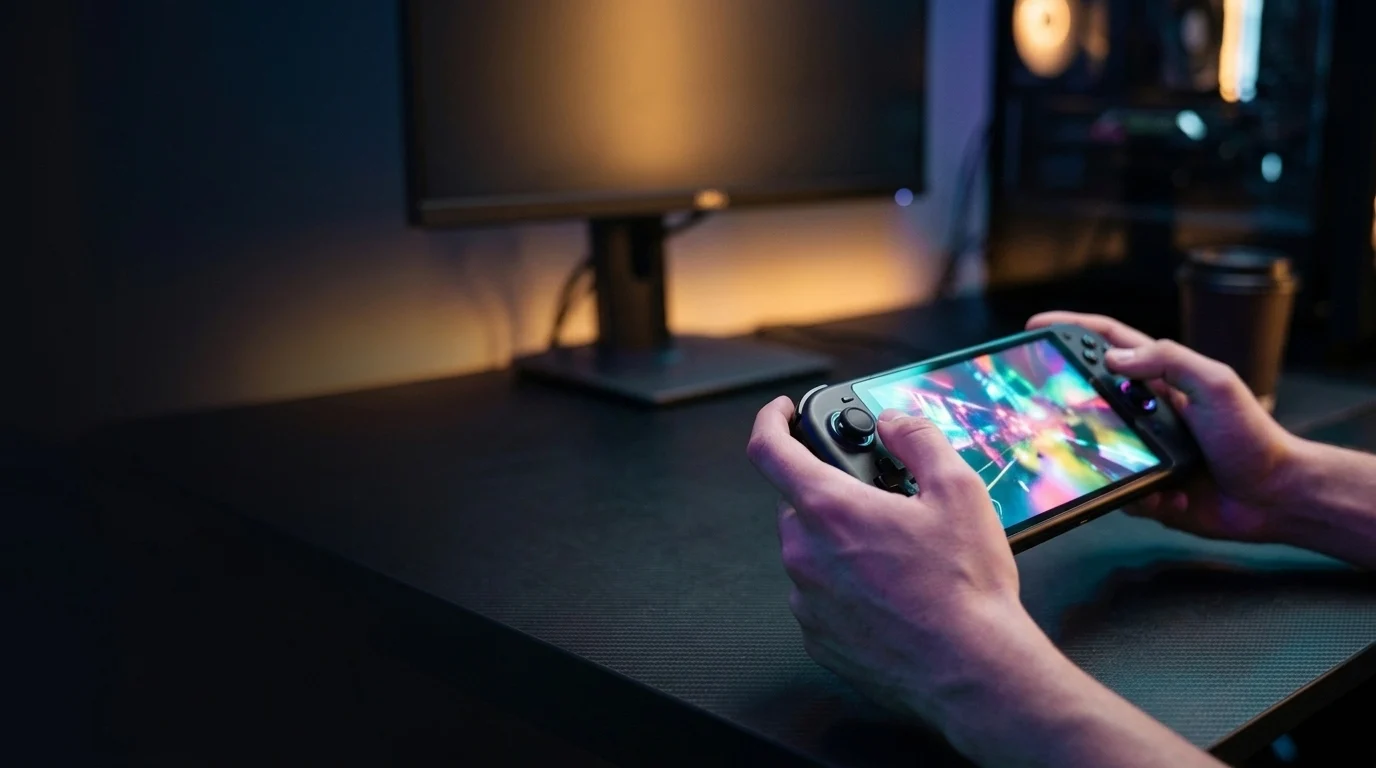
The best handheld gaming PC depends on what you play. If you want a simple, battery-friendly device for your Steam library, pick a SteamOS handheld (SteamOS is Valve’s gaming-focused operating system). If you want other game stores and more power, pick a Windows one.
A handheld gaming PC is a small, controller-style computer that runs real PC games. Unlike a console, it isn’t locked to one store. This guide explains the basics, compares SteamOS and Windows, and lists picks by use case, with honest downsides for each. Beginners are welcome, and every technical term is explained as we go.
Handheld prices are unusually volatile in 2026 because of a global memory-chip shortage, so always confirm the live price. This guide covers the best handheld gaming pc 2026 options as of [UPDATE DATE: Month Year]. This is an information site: we don’t sell devices or offer game downloads.
Quick Facts
| Device type | Handheld gaming PC (portable Windows or SteamOS device) |
| Operating systems covered | SteamOS and Windows |
| Typical price range | [DATA: current low-high price, with “price checked on [date]”] |
| Last updated | [DATA: update date] |
| How we judged them | [DATA: state per device whether it was tested hands-on or researched from specs and reviews] |
| Price warning | Prices are moving because of a memory-chip shortage. Always check the live price at the store. |
What Is a Handheld Gaming PC?
A handheld gaming PC is a full computer built into a controller-shaped body, with a screen in the middle and buttons or sticks on the sides. It runs desktop operating systems such as Windows 11, Bazzite or SteamOS. The best handheld gaming PC for you is the one that matches your games, not the one with the biggest spec sheet.
The big difference from a console is freedom. You can usually install games from more than one store, change settings, and even use it like a normal computer when docked to a monitor. That freedom comes with more setup and more things that can go wrong.
How It Differs from a Console or the Switch 2
A console like the Nintendo Switch 2 is simpler. You buy the game, press play, and it works. A handheld PC asks you to think about storage, settings and compatibility, but it can play your existing PC library. [DATA: Switch 2 current price and one spec to compare, from the official Nintendo site]
Be honest with yourself about the trade-off. A handheld PC can be fiddly and may need tweaking to run some games well. If you want zero fuss, a console may suit you better.
Who Should (and Shouldn’t) Buy One
A handheld PC makes sense if you already own PC games, like trying different game stores, or want to play on the couch or while traveling. It is a poor fit if you only play one console’s exclusives, or if you dislike troubleshooting.
Battery life is short compared with a phone or a Switch-style console, and [DATA: cite real battery range from a tested review]. Plan to carry a charger.
SteamOS vs Windows: The Choice That Matters Most
Before you compare chips and screens, pick your operating system (OS), the main software that runs the device. By 2026 the market split into two camps: SteamOS machines that favor battery life and polish, and Windows machines that trade some of that for raw power and open-platform flexibility.
SteamOS: Polish and Battery Life
A SteamOS handheld boots straight into a console-style menu built around your Steam library. PC Gamer describes Valve’s OS as lightweight and gaming-oriented. It is the easiest way to start, because there is little setup.
The downside is compatibility. SteamOS is Linux-based, so it runs many Windows games through a translation layer rather than natively. Some games, especially online ones with strict anti-cheat (software that blocks cheating), may not run at all. Check each game’s status on ProtonDB before buying a device for one specific title.
Windows: Power and Flexibility
A Windows handheld can use any game store or launcher (an app that holds your game library), such as Xbox, Epic or GOG. PC Gamer notes Windows offers extra game and app compatibility. It also works like a normal PC when docked to a monitor.
The cost is a clunkier experience. Windows was designed for a mouse and keyboard, so menus can feel awkward on a small touchscreen, and background tasks can eat battery. Expect more tweaking.
Quick Decision Rule
- Mostly Steam games, want simplicity: choose a SteamOS handheld.
- Games across several stores, or need anti-cheat support: choose a Windows handheld.
- Unsure: start with the games you play most, then check whether they run on SteamOS.
Picking a handheld gaming PC for beginners is easier if you ignore the marketing and work through four questions.
Match the Device to Your Game Library
Start with what you actually play. Lighter games, such as indie titles and older releases, run fine on almost any handheld. Big, demanding games (often called AAA, meaning large-budget releases) need a stronger device and usually lower settings.
Look up the official requirements for your three favorite games before you buy. [DATA: one or two example games with their official minimum requirements, from the publisher’s site]
Specs That Actually Matter
You don’t need to understand every number. Focus on these:
- APU: the combined processor and graphics chip. It decides how well games run.
- RAM: short-term memory. More helps with demanding games.
- Screen: size and resolution (the number of pixels). A higher resolution looks sharper but is harder for the chip to run.
- FPS: frames per second, or how smooth the game looks. Higher is smoother.
Raw power isn’t everything. Engadget says either Steam Deck model shows its age in 2026, yet an older device can still be a good buy if your games run well on it. Engadget
Battery Life and Real-World Playtime
Handhelds drain quickly in demanding games. Manufacturer battery claims are usually best-case numbers, so look for independent testing. [DATA: tested battery range per recommended device, from a named review]
Budget Planning
The device price isn’t the full cost. Add a microSD card (a small memory card for extra storage), a protective case, and possibly a dock for connecting to a TV. [DATA: typical accessory prices, with date checked]
Keep some money back too. Prices are volatile in 2026, so a device can cost noticeably more or less within weeks.
Best Handheld Gaming PCs by Use Case
Different people need different devices, so these picks are grouped by how you play. Reviewers don’t fully agree on the top spot, and prices are moving, so treat this list as a starting point. Confirm every price and stock status on the day you buy. We don’t sell any of these, and nothing here is a download.
Best Overall: ASUS ROG Xbox Ally X
Type: Windows handheld | Best for: Players who want power and access to several game stores
PC Gamer named it the best handheld gaming PC in its July 2026 update, praising its performance, comfortable shape and value. The same site calls it the best Windows handheld, despite the Xbox branding. If you want Windows and your games live in more than one store, it is the safest starting point.
Honest con: It runs Windows, so the interface can feel awkward on a small screen (see the SteamOS vs Windows section above). [DATA: current price, chip name, battery size, as of Month Year, from ASUS’s official page]
Best Budget Handheld Gaming PC: ASUS ROG Xbox Ally
Type: Windows handheld | Best for: Buyers who want in without spending $1,000 or more
PC Gamer picks the regular, non-X Ally as the best budget option, and says the Steam Deck has been hit by the memory crisis. That makes it a sensible choice if you want Windows at a lower price.
Honest con: Cheaper usually means less power, so demanding games will need lower settings. Check how it differs from the X model before buying. [DATA: price and key spec differences vs. the X model, from official pages]
Best SteamOS Pick: Lenovo Legion Go S (SteamOS version)
Type: SteamOS handheld | Best for: Players who want a bigger screen and a simple, console-style menu
PC Gamer describes it as having an 8-inch screen, comfy grips and Valve’s lightweight gaming OS. FinalBoss calls it the best value pick.
Honest con: It shares the SteamOS limits covered earlier, such as some games and anti-cheat not working. Also confirm the SteamOS version is in stock, because Windows versions of this device exist. [DATA: price and availability of the SteamOS model, as of Month Year]
Best for Steam Library Simplicity: Steam Deck OLED
Type: SteamOS handheld | Best for: Steam-first players who want something that works out of the box
One buying guide lists the OLED model with a 7.4-inch HDR OLED 90Hz screen and SteamOS. The same site lists a 50Whr battery. OLED screens show deeper blacks, so games look richer than on older LCD models. Honest con: Engadget says either Steam Deck model shows its age in 2026. Expect weaker performance than newer rivals in demanding games. [DATA: current price and stock, from Valve’s official store]
Best High Performance: MSI Claw 8 EX AI+
Type: Windows handheld | Best for: Buyers who want maximum power and don’t mind paying for it
PC Gamer names it the best high-performance pick. It was revealed at Computex 2026 with an Intel Arc G3 Extreme chip. One retailer guide gives its downsides as heft and a $1,699 price. Honest con: It is heavy and expensive, and it is a very new product. [DATA: confirm current price and release availability, as of Month Year]
Best for Portability and Productivity: GPD WIN Mini and WIN MAX 2
Type: Windows handhelds | Best for: People who want a handheld that doubles as a small work PC
The GPD WIN Mini 2025 is described as full Windows gaming at 555 g, the portability pick. The WIN MAX 2 2025 has a 10.1-inch 2.5K screen and a real keyboard.
Honest con: These are niche devices from smaller brands, and the WIN MAX 2 was listed from $1,493.95 at one retailer. Check warranty and support terms before buying. [DATA: current prices and support details, as of Month Year]
A Note on Conflicting Picks
Guides don’t agree. An earlier PC Gamer update in February 2026 named the Legion Go S SteamOS best overall, and GamesRadar still lists the original ROG Ally as its handheld PC pick. That doesn’t mean one is wrong. Each guide was updated at a different time, which is why this article carries a dated update log.
Common Mistakes When Buying a Handheld Gaming PC
Most regrets come from a few avoidable mistakes. Here is what to watch for.
Buying on Specs Alone
A strong chip doesn’t guarantee a good experience. Weight, grip comfort, screen quality and battery life matter just as much, because you hold the device for hours. If you can, try one in a store first, or read reviews that comment on comfort.
Ignoring Anti-Cheat and Launcher Support
Some online games use anti-cheat software, which watches for cheating and can refuse to run on certain systems. If you play competitive online games, check whether they work on the OS you’re considering. On SteamOS, check the game’s page on ProtonDB (a community site that tracks compatibility). On Windows, check the game’s official support page.
Overpaying During Price Spikes
Handheld prices are unusually volatile in 2026 because of a global memory-chip shortage. A price you saw last month may not hold. Compare at least two retailers, note the date you checked, and don’t buy in a rush because a listing says stock is low. finalboss
Skipping Storage Planning
Modern games can be very large, and a small built-in drive fills up quickly. Decide how many games you want installed at once. Then check whether the device accepts a microSD card or has an upgradeable internal drive. [DATA: storage options and upgrade method per recommended device, from official specs]
Trusting Old “Best Of” Lists
Because picks change so fast, an out-of-date guide can send you to a discontinued or overpriced device. Check the “last updated” date on any list you read, including this one.
Honest Downsides of Handheld PCs
A handheld gaming PC is a great idea, but it isn’t for everyone. Here are the real drawbacks.
Battery Life Is Limited
Demanding games drain the battery fast, so you’ll often play near a charger. Lowering the screen brightness and the frame rate (FPS, how smooth the game looks) helps, but it’s a trade-off. [DATA: tested battery range from a named independent review]
Heat and Fan Noise
Powerful chips in a small body get hot, so fans can be audible during long sessions. Some players find this distracting, especially in quiet rooms. Check reviews for noise comments on the exact model you want.
Windows Can Feel Clunky
On Windows handhelds, menus designed for a mouse can be awkward on a small touchscreen. Updates and background apps can also interrupt play or use extra power. SteamOS is simpler, but it brings the compatibility limits covered earlier.
Prices Change Quickly
Because of the memory-chip shortage, the “best value” device can change within weeks. Plan for a budget range, not a single number.
Who Should Buy a Console Instead
If you want zero setup, one guaranteed experience and a stable price, a console is simpler. Consider a handheld PC only if you value an open library and are comfortable with some tinkering.
FAQ
What is the best handheld gaming PC for beginners?
For most beginners, a SteamOS handheld is the simplest start, because it boots into a console-style menu with little setup. One buying guide recommends the Steam Deck OLED for anyone who mainly plays Steam games and wants a device that works out of the box. If your games are spread across several stores, a Windows model such as the ASUS ROG Xbox Ally is a better fit, though it needs more tweaking. This is a general guide, so confirm current prices and stock first. narcosis-the-game
Handheld gaming PC vs Steam Deck: which should I buy?
The Steam Deck is itself a handheld gaming PC, so the real question is Steam Deck versus newer rivals. The Steam Deck is simple and Steam-focused. Engadget notes that both Steam Deck models show their age in 2026, so newer devices may run demanding games better. PC Gamer also says the Steam Deck has been hit by the memory crisis, which affects its price. Check current pricing before deciding. [DATA: current Steam Deck price and availability, from Valve’s official store]
SteamOS or Windows on a handheld: which is better?
Neither is better for everyone. SteamOS is easier and tends to favor battery life, while Windows works with more stores and apps. One guide describes the split as polish and battery life on SteamOS versus raw horsepower and flexibility on Windows. Choose based on where your games live and whether they use anti-cheat.
Can a handheld gaming PC run AAA games?
Yes, but usually at lower settings than a desktop. AAA means large-budget, graphically demanding releases. One 2026 guide says running AAA PC titles on a device that fits in a backpack once seemed like a fantasy. Performance depends heavily on the game, so check each game’s official requirements and independent benchmarks. [DATA: one example game with tested settings and FPS, from a named benchmark source]
How long does the battery last on a handheld gaming PC?
It varies a lot by game and settings. Demanding games drain the battery quickly, and manufacturer claims are often best-case figures. Look for independent testing of your exact model. [DATA: tested battery range per device, from a named review, with date]
Conclusion
The best handheld gaming PC is the one that fits the games you actually play. Pick SteamOS if you want simplicity and mostly play on Steam. Pick Windows if you need other stores, anti-cheat support, or more power, and accept some extra tinkering.
Remember the honest trade-offs: short battery life, fan noise, a clunkier Windows interface, and prices that can move within weeks. Before you buy, check the live price, check your must-play games against the device, and look at the date on every list you read, including this one.
This site is for information only. We don’t sell devices or host game downloads, so always buy from the official store or a trusted retailer.