
Finding the right home can be exciting, but searching through property listings, comparing prices, and understanding real estate information can quickly become overwhelming. Realtor.com is an online real estate platform that helps people explore homes for sale, rental properties, property details, and housing-related information. It is particularly relevant to people who want to buy a house, rent an apartment, sell a property, or research a neighborhood before making a decision.
People search for Realtor.com for different reasons. Some want to browse available homes, while others want to estimate property values, compare rental options, or learn about the home-buying process. Real estate professionals may also use the platform to connect potential clients with property listings and related services.
Understanding how the website works can help users make better decisions during their property search. This guide explains the platform’s meaning, background, major features, common misconceptions, and alternatives. It also covers how Realtor.com is discussed in online conversations and how to evaluate property information carefully before making important financial decisions.
1. Realtor.com Meaning and Definition
Realtor.com is an online real estate marketplace where users can search for residential properties and access information related to buying, renting, and selling homes. Its name combines the real estate term “Realtor” with the “.com” internet domain extension.
The term Realtor has a specific meaning in the United States. It refers to a real estate professional who is a member of the National Association of REALTORS® and agrees to follow its membership requirements and professional code of ethics. Not every real estate agent is a REALTOR®, although the terms are sometimes used interchangeably in everyday conversation.
Realtor.com, meanwhile, is a website and brand. It provides an online destination for people researching housing options and real estate information.
What can users find on the platform?
Depending on the property, location, and currently available features, visitors may find:
- Homes listed for sale.
- Houses, apartments, and other residential rentals.
- Property photographs, descriptions, and selected details.
- Asking prices and certain historical property information.
- Maps and neighborhood information.
- Details about real estate agents and listing contacts.
- Tools and educational resources for buyers and renters.
The availability and accuracy of individual details can vary. A property listing may change status, and information supplied by listing participants may require independent verification.
Why do people search for Realtor.com?
Some users want to find their next home, while others are researching the real estate market or comparing properties in different neighborhoods. Sellers may explore similar listings to understand local competition, and renters may use the platform to identify potential apartments or houses.
The simplest definition is that Realtor.com is a real estate website designed to help people discover property listings and access housing-related information. It is not a government property registry, a guarantee of a property’s condition, or a substitute for professional legal and financial advice.
2. Background and Development of Realtor.com
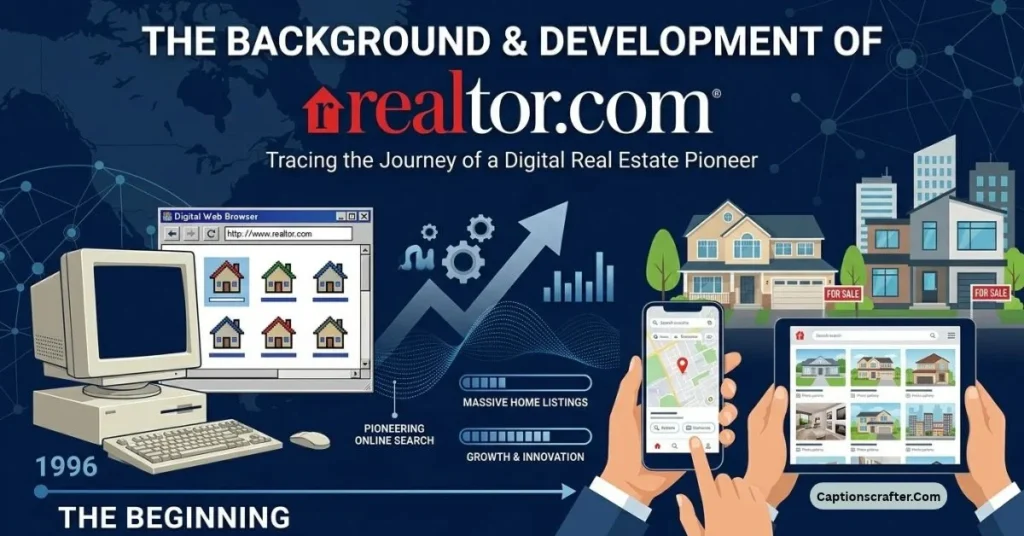
Realtor.com developed as part of the broader shift from traditional real estate searches toward online property discovery. Before digital listings became common, buyers and renters often depended on newspaper advertisements, printed property brochures, real estate offices, and direct conversations with agents.
The growth of the internet changed how people searched for homes. Online platforms made it easier to view multiple properties, compare asking prices, inspect photographs, and contact professionals without visiting every property in person.
Realtor.com emerged as a major consumer-facing real estate website associated with the National Association of REALTORS® brand. Its development helped make online property information more accessible to people researching housing markets across the United States.
Over time, real estate websites expanded beyond simple lists of available homes. Modern platforms may include interactive maps, estimated property values, mortgage calculators, neighborhood information, saved searches, and alerts about new listings.
How the platform fits into the real estate market
Real estate transactions involve several participants, including buyers, sellers, agents, landlords, tenants, lenders, inspectors, and attorneys. An online listing platform can help people discover properties and begin conversations with relevant professionals, but it generally represents only one part of the overall transaction process.
For example, a buyer might find a home online, contact the listing agent, arrange a viewing, obtain financing, and hire an inspector before deciding whether to make an offer.
A renter might search for an apartment, compare lease terms, contact a property manager, and review the rental agreement before paying a deposit.
Why its background matters
Understanding a platform’s role helps users recognize the difference between finding information and completing a transaction. A property appearing on a website does not mean it has been independently inspected, that every detail is guaranteed, or that the advertised price will remain unchanged.
For current company ownership, partnerships, product features, and operating details, users should consult Realtor.com’s official corporate and informational pages. Website features and business arrangements can change over time.
The key point is that Realtor.com serves as a digital starting point for real estate research. Its value comes from helping users discover properties and information, while important decisions still require verification, communication with the relevant parties, and appropriate professional guidance.
3. Usage in Different Contexts: Chat, Social Media, and Professional Fields
Realtor.com appears in several contexts because housing is a common topic in everyday conversations, online communities, and professional settings.
In everyday conversations
Friends, relatives, and colleagues may mention the website when discussing a move, a home purchase, or rental options.
Examples include:
- “I found a house I like on Realtor.com.”
- “Can you check the property details on Realtor.com?”
- “I’m comparing rental prices before moving.”
- “I saved a few homes to discuss with my family.”
In these examples, the name refers to the property-search platform, not a slang expression.
On social media
Real estate agents, homebuyers, renters, and property enthusiasts may discuss listings or share links through Facebook, Instagram, TikTok, and other social networks.
A creator might discuss home-buying tips, show a property tour, or compare housing prices in different areas. Realtor.com may be mentioned as a place to look for additional listing information.
However, social media content may be promotional, outdated, or incomplete. A video showing a property does not guarantee that the home remains available or that the advertised price is current.
In professional settings
Real estate professionals may use online listings to research comparable properties, monitor market activity, and communicate with potential clients. Property researchers may also compare asking prices, property characteristics, and local inventory.
For example, an agent might use several listings as a starting point when discussing a neighborhood with a buyer. A housing researcher might study advertised prices across different locations.
Online listing prices alone do not establish a property’s market value. A proper comparison should account for location, size, condition, recent comparable sales, and other relevant factors.
In education and financial planning
People learning about homeownership may use the platform to understand typical asking prices and identify housing options within a budget. They may then calculate potential mortgage payments, insurance expenses, taxes, and maintenance costs.
The website can help users gather information, but the numbers should be checked against current lender estimates, local records, and actual transaction details.
Across all these contexts, Realtor.com is best understood as a real estate research resource rather than a guarantee of property availability, value, or transaction success.
4. Meaning in Chat, WhatsApp, Instagram, and TikTok
Realtor.com is a proper name associated with a real estate website. It is not a widely recognized texting abbreviation with a separate meaning on messaging or social media platforms.
Realtor.com in WhatsApp messages
People may send a property link through WhatsApp when discussing a potential home or rental.
For example:
“Check this house on Realtor.com. It might be a good option for our move.”
The website name identifies where the property was found. It does not communicate a hidden emotional meaning or internet slang definition.
Realtor.com on Instagram
Real estate professionals and home-design creators may mention property websites in captions, Stories, or profile descriptions. They might use a listing as a reference when discussing a home’s layout, location, or asking price.
Users should remember that photographs and promotional captions may not show every aspect of a property. Check the original listing and confirm its current status before arranging a viewing.
Realtor.com on TikTok
Short videos about house tours, home prices, first-time buying, and rental searches may mention Realtor.com as a source for discovering listings.
A property featured in a video may already have been sold or rented. Always check the current listing details rather than assuming that a viral post reflects real-time availability.
Does Realtor.com have a special slang meaning?
Generally, no. If someone writes “I found it on Realtor.com,” they are referring to the real estate website. If the phrase appears in a joke or a private conversation, the surrounding context may add a personal meaning, but that is different from an established slang definition.
If a link is shared without explanation, you can simply ask what property or information the sender wants you to review.
Understanding this distinction helps readers avoid confusing brand names with abbreviations, hashtags, or informal expressions used in online communication.
5. Meaning in Physics, Medical, and Aircraft Terminology
Realtor.com belongs to the real estate and property-search context. It is not an established technical term in physics, medicine, or aviation.
Physics
Physics studies matter, energy, motion, forces, and the natural laws governing the universe. Realtor.com does not identify a recognized physics concept, formula, unit, or scientific process.
The website may display information about a building’s size or physical characteristics, but those details do not make its name a scientific term.
Medical terminology
Medical terminology includes recognized names for diseases, treatments, medications, anatomical structures, and clinical procedures. Realtor.com is not a standard medical diagnosis or treatment term.
A home search may involve health-related considerations, such as accessibility, proximity to healthcare facilities, indoor air quality, or the suitability of a property for someone with mobility needs. These are housing considerations rather than meanings of the website’s name.
Aircraft and aviation terminology
Aviation terminology covers aircraft systems, navigation, flight operations, maintenance, and safety procedures. Realtor.com is not a recognized aircraft model, aviation component, flight code, or standard aviation abbreviation.
However, real estate listings sometimes mention proximity to airports, flight paths, or transportation facilities. Buyers considering such properties may want to investigate potential noise, travel convenience, and applicable local restrictions.
Why the distinction matters
A word or brand may appear in many different contexts without carrying the same meaning in each field. In this case, the recognizable meaning of Realtor.com is tied to real estate and online property discovery.
When researching scientific, medical, or aviation topics, consult authoritative resources relevant to the field. Do not assume that a familiar-looking name has a technical definition simply because it appears in a specialized discussion.
Understanding the intended context helps prevent incorrect interpretations and ensures that information is evaluated using appropriate sources.
6. Common Misconceptions About Realtor.com
Online property platforms are useful, but users should understand their limitations before relying on listings for major decisions.
Misconception 1: Every property displayed is still available.
Listings can become outdated when a home is sold, rented, withdrawn, or placed under contract. Confirm the current status with the listing contact.
Misconception 2: Realtor.com owns every property it displays.
A listing platform generally presents information about properties offered by owners, agents, brokers, or other listing participants. Displaying a listing does not mean the platform owns the property.
Misconception 3: Every listed price represents the home’s actual market value.
An asking price is the amount a seller is requesting, not independent proof of value. Market value depends on several factors, including comparable sales, location, condition, and buyer demand.
Misconception 4: All property information is guaranteed to be accurate.
Information may come from listing participants, public records, or other sources. Details can contain errors or become outdated, so important facts should be independently verified.
Misconception 5: A Realtor and a real estate agent are always the same thing.
The term REALTOR® refers to membership in the National Association of REALTORS®. Not every licensed real estate agent is a REALTOR®.
Misconception 6: Finding a home online completes the buying process.
A listing is only a starting point. Buyers may still need financing, property inspections, title checks, legal documentation, negotiations, and closing arrangements.
Misconception 7: An online estimate guarantees a future selling price.
Automated estimates and pricing tools are approximations. Actual sale prices depend on local conditions, property characteristics, timing, and negotiations.
The best way to use Realtor.com is to treat it as a source for discovery and preliminary research. Verify important details with the listing agent, relevant public records, qualified inspectors, lenders, and other appropriate professionals before committing money or signing a contract.
7. Similar Terms and Alternatives to Realtor.com
People searching for property information may encounter several websites with similar purposes. Although these platforms help users explore real estate, their features, listing coverage, and available tools can differ.
Zillow
Zillow is an online real estate platform that offers property listings, home-value estimates, rental information, and other housing resources. Users often compare Zillow with Realtor.com when researching homes or estimating property values.
Redfin
Redfin provides real estate search tools and brokerage-related services in markets where it operates. Its platform can help users explore listings, review property details, and learn about buying or selling homes.
Trulia
Trulia focuses on residential property discovery and neighborhood information. Depending on the available listing and location, users may find information about local surroundings, housing options, and community characteristics.
Apartments.com
Apartments.com is particularly relevant to people searching for rental housing. It provides apartment and rental-property listings, making it a useful alternative for renters who are not necessarily looking to purchase a home.
Homes.com
Homes.com is another property-search platform that helps users discover homes for sale and access real estate information. Its listing coverage and features may vary by location.
Comparison of popular property websites
| Platform | Main purpose | Useful for |
|---|---|---|
| Realtor.com | Real estate search and property information | Buyers, renters, and sellers |
| Zillow | Property listings and home-value tools | Buyers, sellers, and homeowners |
| Redfin | Property search and brokerage services | Buyers and sellers in supported markets |
| Trulia | Property discovery and neighborhood information | People researching homes and locations |
| Apartments.com | Rental-property discovery | Apartment hunters and renters |
| Homes.com | Residential real estate search | Homebuyers and property researchers |
These platforms are not interchangeable in every situation. Listing coverage, update frequency, pricing information, and professional services can vary.
For the best results, compare more than one source. Check whether the property is still available, review recent comparable sales, and verify key information with the relevant agent or property owner. If you are renting, carefully review the lease terms, required deposits, and additional fees.
The most suitable platform depends on your goal. Realtor.com can be a useful starting point for property discovery, while specialized rental platforms or local real estate professionals may offer more relevant assistance for particular needs.
8. How to Respond When Someone Shares a Realtor.com Link
When someone sends you a Realtor.com link, the best response depends on why they shared it. They might want your opinion about a house, ask you to compare properties, or simply share an interesting listing.
If someone shares a house they like
You could respond with:
- “The house looks interesting. Have you checked the neighborhood?”
- “Let’s compare the price with similar homes nearby.”
- “Do you know whether the property is still available?”
- “We should arrange a viewing before making a decision.”
These responses encourage a more informed discussion rather than relying only on photographs.
If a friend is looking for a rental
You might say:
- “Does the rent fit your monthly budget?”
- “Have you checked whether utilities are included?”
- “Make sure you understand the lease terms before paying a deposit.”
Renters should also verify the landlord or property manager and confirm that the person offering the property has the authority to rent it.
If someone shares a listing for professional reasons
A real estate professional might send a link to discuss comparable properties, market conditions, or a potential transaction. In that case, ask which details are most relevant, such as the asking price, location, property size, or recent sales nearby.
If you suspect a fraudulent property listing
Be cautious if someone asks for money before allowing a reasonable viewing or verification process. Avoid sending deposits through unusual payment methods or relying solely on documents and photographs provided in a message.
If a message claims to come from a real estate agent, verify the person’s identity and professional details independently. Do not assume that a listing is genuine merely because it appears on a familiar website.
A simple rule for responding
Ask questions, compare information, and verify important details before committing. A property link can start a useful conversation, but it should not replace proper due diligence.
9. Differences Between Realtor.com and Similar Real Estate Terms
Understanding common real estate terminology makes it easier to interpret listings and communicate with professionals.
| Term | Meaning | How it differs |
|---|---|---|
| Realtor.com | An online real estate platform | Helps users discover property listings and related information |
| REALTOR® | A real estate professional who belongs to the National Association of REALTORS® | Refers to a professional membership designation, not a website |
| Real estate agent | A professional licensed or authorized under applicable rules to assist with property transactions | The term does not necessarily mean the person is a REALTOR® |
| Real estate broker | A professional with the qualifications or licensing required for brokerage activities under applicable rules | May have additional responsibilities and authority |
| MLS | Multiple Listing Service, a system used by participating real estate professionals to share property listing information | Supports listing cooperation and distribution |
| Property appraisal | An assessment of a property’s value conducted for a particular purpose | Evaluates value rather than simply displaying an asking price |
| Property listing | An advertisement or record describing a property offered for sale or rent | Represents an individual property, not the entire platform |
These differences matter when using Realtor.com to research a property. The website is a place to discover information, while a real estate agent or broker may provide professional assistance with a transaction.
Likewise, an asking price is not the same as an appraisal or a confirmed sale price. A property’s listing may provide useful starting information, but buyers should examine comparable sales and seek appropriate professional advice.
A Multiple Listing Service is also different from a public property-search website. MLS systems generally serve participating real estate professionals, and the information available to the public can depend on local practices and agreements.
Knowing these distinctions helps users ask better questions and avoid misunderstandings during the buying, selling, or renting process.
10. Relevance in Online Conversations and Dating Apps
Real estate is a common topic in online conversations because moving, renting, and buying a home are important life decisions. Realtor.com may appear in discussions between family members, friends, coworkers, or people who are getting to know each other through dating apps.
For example, someone might share a listing while discussing future plans, preferred neighborhoods, or the possibility of moving to another city. In such conversations, the website name simply identifies the source of the property information.
However, property listings and real estate conversations can also be misused by scammers. Fraudulent individuals may pretend to be landlords, property owners, real estate agents, or people looking for a home.
Warning signs to recognize
Be careful if someone:
- Requests a deposit before you can reasonably verify the property.
- Claims to own a property but refuses reasonable verification.
- Pressures you to transfer money immediately.
- Offers an unusually attractive deal without a credible explanation.
- Sends suspicious payment links or requests sensitive financial information.
- Claims to represent a company or agent whose identity cannot be independently confirmed.
These are general real estate fraud warning signs and are not claims about Realtor.com itself.
How to protect yourself
Check the property’s current status, verify the identity of the person offering it, and confirm important details through independently obtained contact information. Before signing a lease or purchase agreement, understand the relevant legal requirements and financial obligations.
If you are discussing a possible move with someone you met online, avoid sending money or identity documents solely because the person has shared a property listing. A listing is not proof of the sender’s identity, financial situation, or intentions.
You can remain polite while maintaining clear boundaries. Ask questions, take time to investigate, and do not let anyone pressure you into making a financial decision.
The same principles apply whether a property link comes from a friend, a real estate professional, or a new online contact. Verification and careful judgment are essential whenever housing and money are involved.
Conclusion
Realtor.com is an online real estate platform that helps people discover homes for sale, rental properties, and housing-related information. It can be useful for comparing listings, researching neighborhoods, and beginning the process of buying or renting a property.
However, an online listing is only a starting point. Property availability, asking prices, ownership details, and other information should be verified before making financial commitments. Comparing multiple platforms and consulting qualified real estate professionals can provide a more complete picture of the market.
It is also important to understand the difference between Realtor.com, a REALTOR®, a real estate agent, and other industry terms. Knowing these distinctions makes property research and communication more effective.
Whether you are searching for your first home, exploring rental options, or helping someone compare properties, use reliable information and take time to evaluate each opportunity. By combining online research with careful verification, you can make more confident decisions throughout your real estate journey.

I Am Henry Collins writes creative caption ideas at captionscrafter.com, helping social media users find catchy, trendy, and engaging captions.